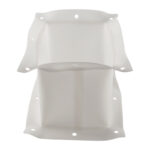

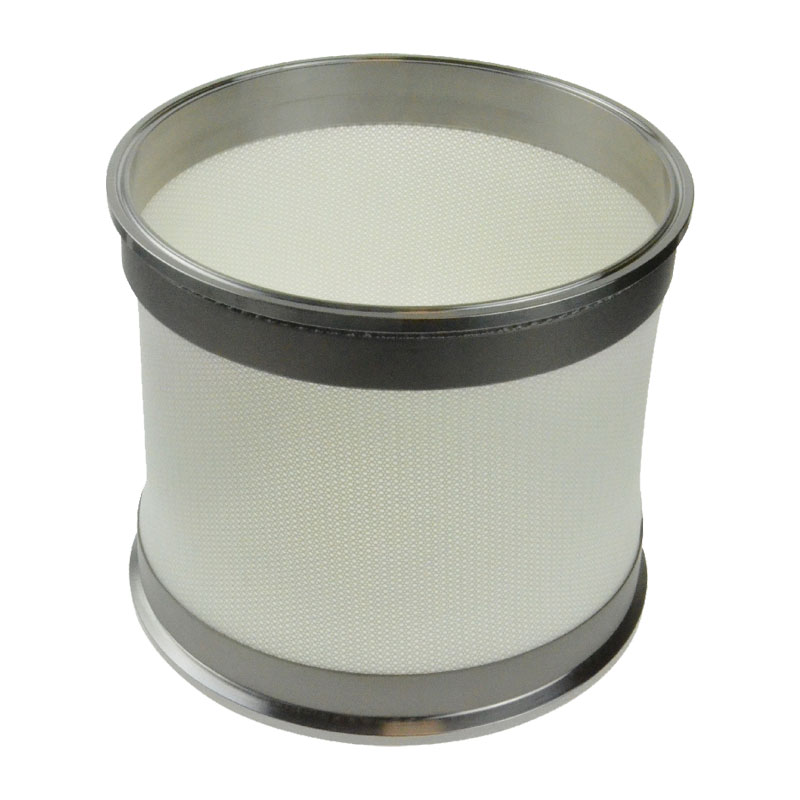
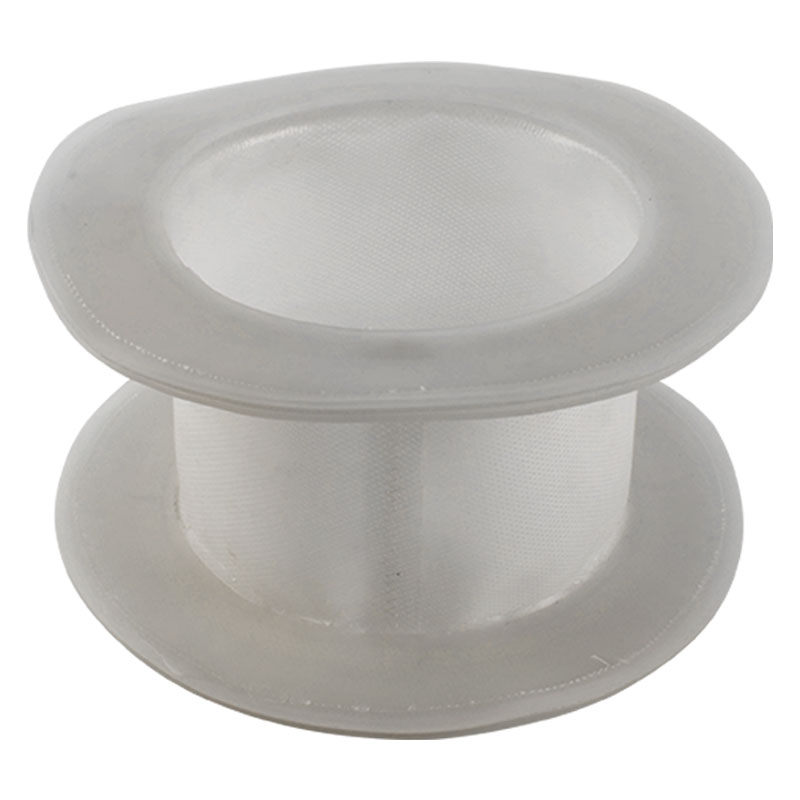
Applications
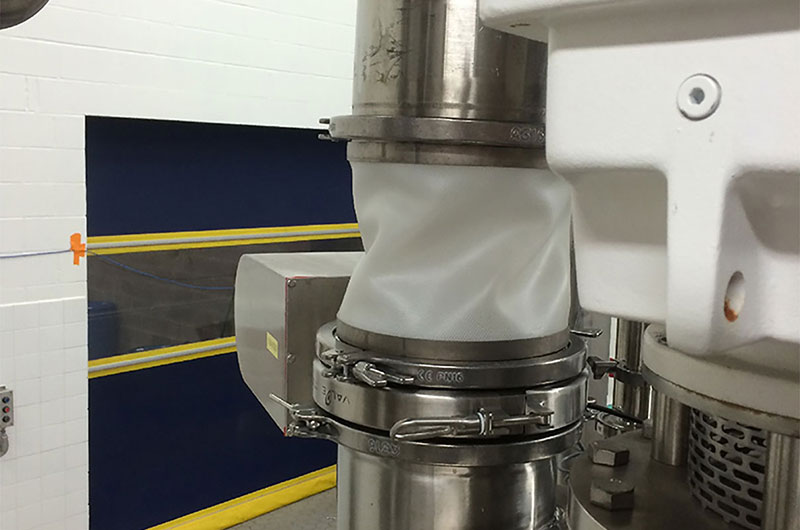
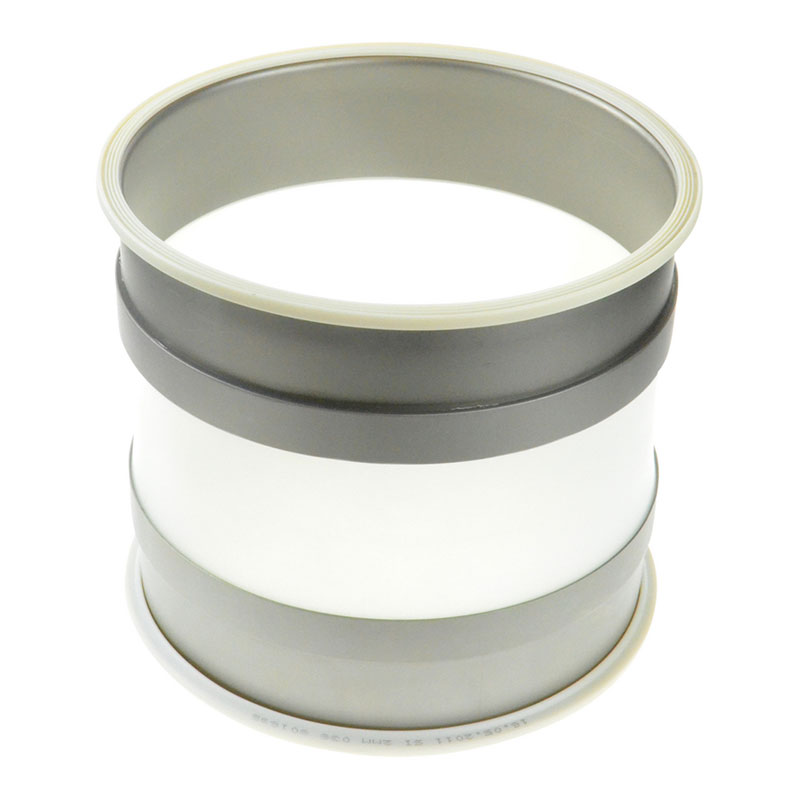
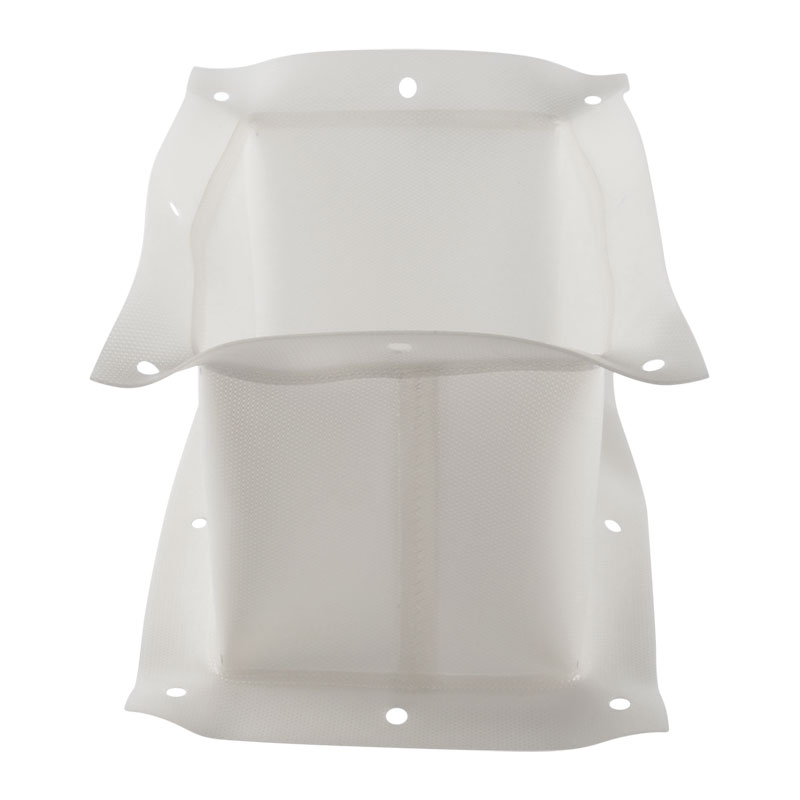
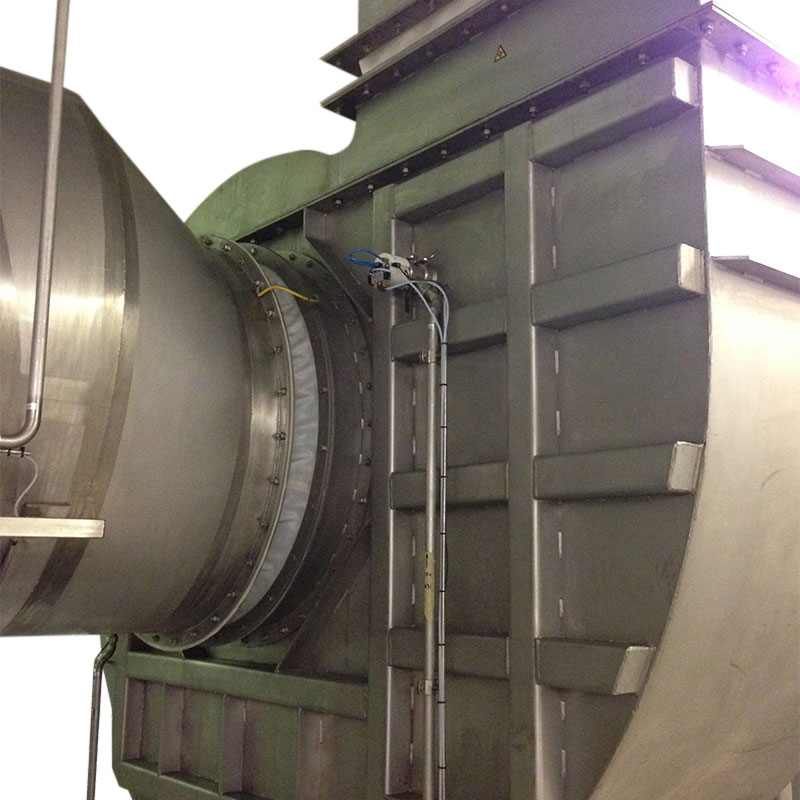
Food and beverage, outdoor applications, Stationary, Vibratory, Gyratory, Sifters, Screeners, Feeders, Spray driers, Fluid Bed, Static Cool Bed, Bin dischargers, Hoppers, Conveyors, Packing equipment, Storage silos, Screw conveyors, Valves, butterfly valves, Rotary valves, Tanks, Silo’s, any sort of product handling equipment, Air ducting, Fans, Inflatable seals, Covers, Outside protection sleeves, Bellows, Load cell (high volume, weight and capacity), Harmonica’s, Telescopic applications.
Advantages
- Silicone has a broad temperature range and is generally odorless / non-toxic.
- Silicone offers excellent resistance to high temperatures, ozone, oxygen, UV light, moisture, and fungus.
- Silicone also has excellent vibration damping and maintains its dielectric strength.
- Silicone has low compression set and offers good fatigue resistance, flex resistance, and elongation.
- Silicone offers excellent resistance to Corona discharge, Cosmic radiation, Ionizing radiation, and weathering in general.
- Silicone has an excellent resistance to CIP cleaning and Cleaning Chemicals.
Limitations
- Standard Silicone has poor tensile, tear and abrasion resistance.
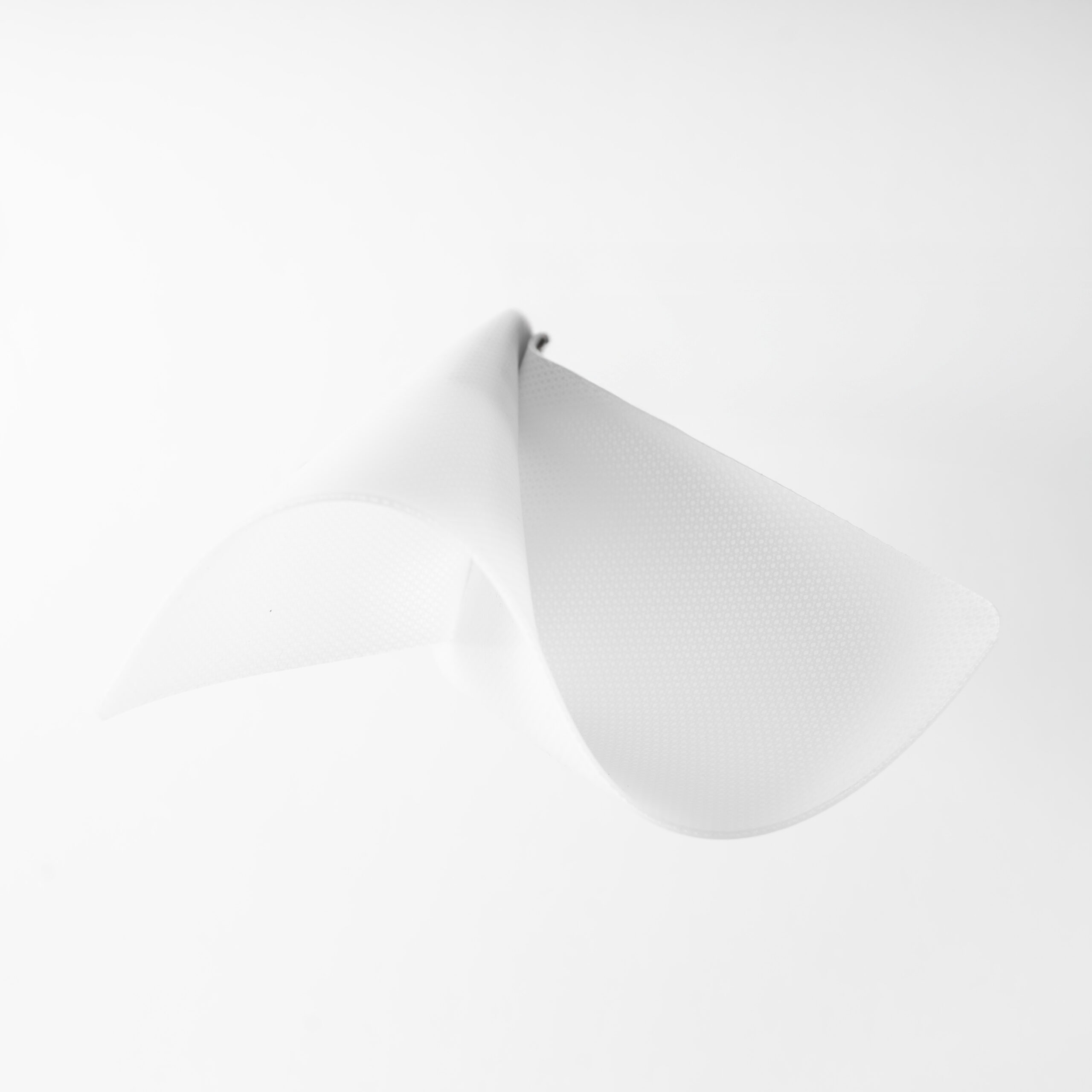
- PKSR has been enhanced with an open polyester mesh ply to improve the tear strength with 200%.
- Silicone has poor resistance to most concentrated solvents, concentrated acids, concentrated alkaline, oils, fuels, hydrocarbons, and steam.
- Silicone may become porous to high concentration fatty substance such as coffee oil at higher temperature applications (above 70° C/158° F).
Chemical Resistance
For a detailed chemical resistance, we advise you to please see our chemical compatibility chart.
Pressure Resistance for Flexible Connectors
0,34 Bar / 5.0 PSI For temperatures up to 90 °C / 195°F. Please see “Operating Pressure Guide” for further information. We recommend using the shortest possible connector for applications where increased pressure and/or high temperature is expected. Please contact us for more information.
Weighing Applications
High volume weight and capacity weighing, and dosing applications please see “weighing and dosing guide” for further information.
ATEX & Explosion Safety
PKSR has been tested for its electrostatic properties and has been found safe to use in all dust, powder, and air mixture explosion hazardous areas, such as ATEX zones 20, 21, 22, within the written restrictions to length, airspeed and minimum ignition energy of the powder / dust mixture passing through.
Please read our full testing reports and statement to determine of PKSR is safe to use in your explosion hazardous environment. Please contact us for further information.
Surface Resistance: 1,9 x 10⁹ Ω IEC 60093/EN1149 and TRBS 2135
Volume Resistance: 1 x 10¹³ Ω IEC 60093/EN1149-1
Classified as Non-Conductive.
The material PKSR 2 mm Silicone with Polyester knitted inner Ply can be safely used in relation to static hazards for flexibles up to a maximum length of 1000 mm for all situations containing dust-air mixtures with minimum ignition energies larger than 1000 mJ.
In cases of low transport rates (product transport velocity less than 2 m/s) PKSR can be used for flexibles up to a maximum length of 1000 mm for dust-air mixtures with minimum ignition energies larger than 10 mJ.
In case of short flexibles (less than 100 mm) PKSR can be safely used inside dust for all situations containing dust-air mixtures with minimum ignition energies larger than1 mJ.
PKSR shall never be used in case of flammable gases and vapors, hybrid flammable gas/vapour/dust-air mixtures and in case of dusts with minimum ignitions energies less than 1 mJ. The minimum ignition energy values referring to in this report shall be determined following DIN EN 13821, IEC 61241-2-3 and without induction in the circuit.
The temperature influence of the on the minimum ignition energy shall be considered.